




Endemic flora of the Canary Islands: a unique botanical treasure trove
Introduction
The Canary Islands are renowned for their unique biodiversity, hosting many plant species that cannot be found anywhere else. The archipelago is home to spectacular endemic flora thanks to its geography, isolation, and highly diverse climate. This post explores the historical origins, special characteristics, and notable examples of Canary endemic flora, such as the Canary pine (Pinus canariensis), Canarina canariensis, and Aeonium virgineum.
In future articles, we will delve into some of our flora’s most beautiful endemic species, all of which can be found at Finca Casa de La Virgen.
History and Origin
The origins of many of the endemic plant species of the Canary Islands go back millions of years, when the islands emerged from the Atlantic Ocean as a result of volcanic activity. Over time, the geographical isolation and unique climatic conditions have allowed many plants to evolve independently.
Oceanic islands are known as enclaves of extraordinary biological diversity. Globally, one-sixth of terrestrial plant species are concentrated in insular ecosystems. The Canary archipelago exemplifies this phenomenon, harboring remarkable floral wealth with a high number of endemic species.
Characteristics
The endemic flora of the Canary Islands exhibits unique traits that have enabled it to survive under challenging conditions. Most species have developed mechanisms to withstand both the aridity and climatic variability of the islands, which range from high mountain zones with cold temperatures to dry and warm coastal areas. These plants have also adapted to volcanic soils, which are generally nutrient-poor yet possess impressive water-retention properties.
Climate and Location
The Canary Islands’ climate plays a crucial role in shaping its endemic flora. The islands enjoy a subtropical climate, heavily influenced by the trade winds, which create diverse microclimates. In mid-altitude regions and higher elevations, moderate temperatures and humidity favor lush forests. In contrast, lower, drier areas are home to drought-resistant species.
Examples of Canary Endemic Flora
This post highlights just a few examples of Canary endemics. Future articles will explore these species in greater detail, showcasing the variety found across the archipelago.
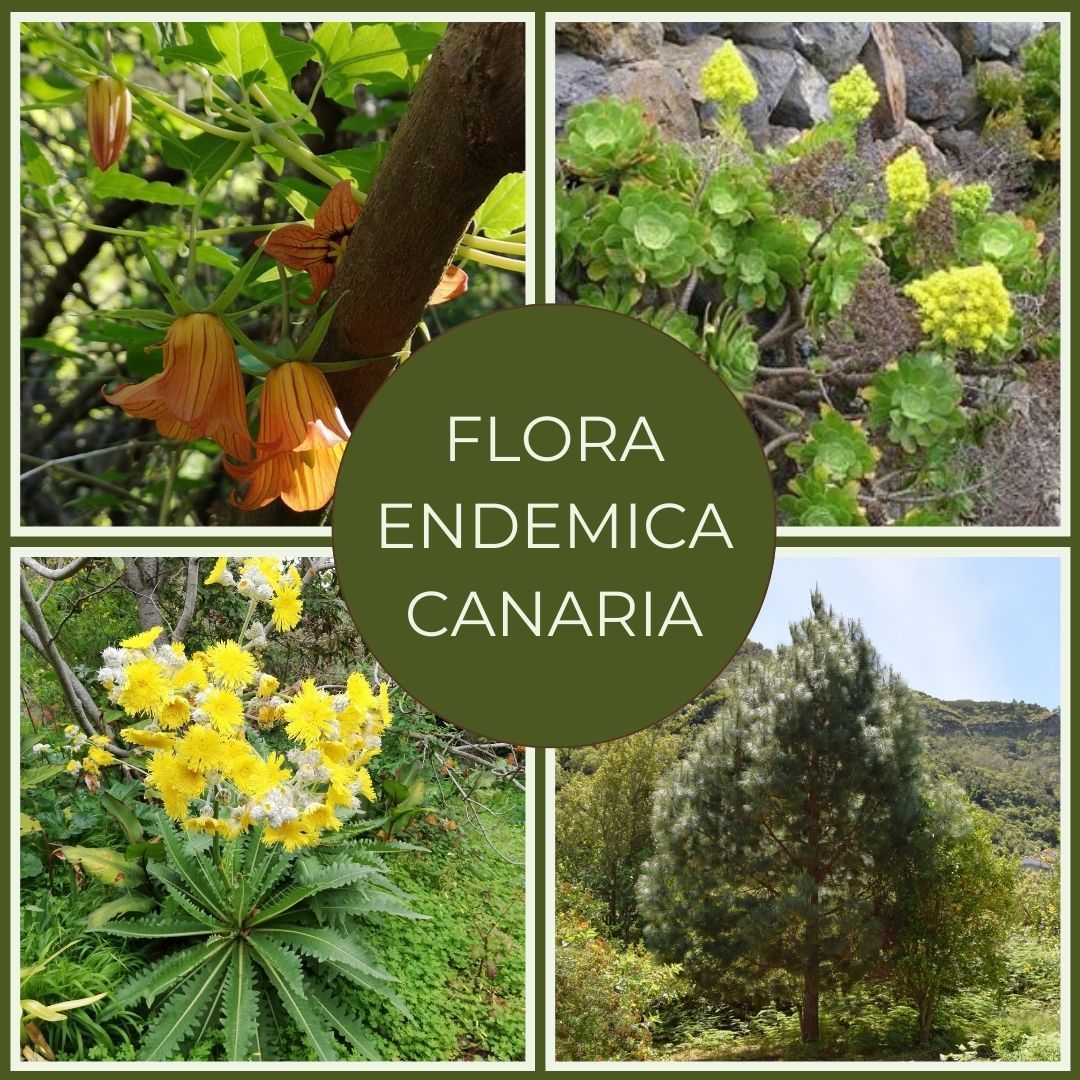
- Canary pine (Pinus canariensis)
The Canary pine is one of the archipelago’s most iconic trees, adapted to withstand wildfires thanks to its thick bark and ability to regenerate after fire. It is primarily found in Gran Canaria, Tenerife, La Palma, and El Hierro.
- Canarina canariensis
Also known as “bicácaro,” this climbing plant features large, reddish-orange flowers. It thrives in the humid laurel forests and serves as a clear example of how Canary flora has adapted to high-moisture environments.
- Aeonium ssp. virgineum
This succulent plant is endemic to the driest areas of the islands, recognized by its rosette-shaped leaves. Its ability to store water in its leaves allows it to survive under extremely arid conditions.
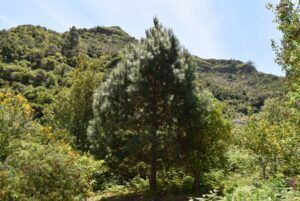
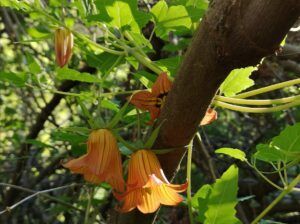
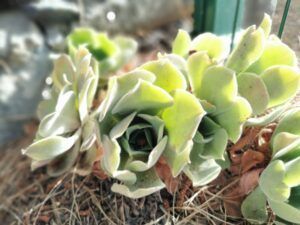
images of some examples of endemic Canary Island flora taken at Finca Casa de La Virgen
Importance of Conservation
Canary endemic flora is an invaluable natural resource, both for biodiversity and tourism. However, many species are endangered due to urban expansion, agriculture, and climate change. It is essential to continue promoting the conservation and protection of these unique ecosystems.
Conclusion
The endemic flora of the Canary Islands is a natural heritage that must be cherished and safeguarded. Its history, unique traits, and special adaptations make these plants a true botanical treasure. For visitors to the islands, exploring this flora provides a connection to the essence of a truly unique place in the world.