




Canarina Canariensis: A Flower of Exotic Beauty
In this blog post, we will explore the characteristics of the Canarina Canariensis, its flowering period and other fascinating aspects that will bring us closer to this unique climbing plant.
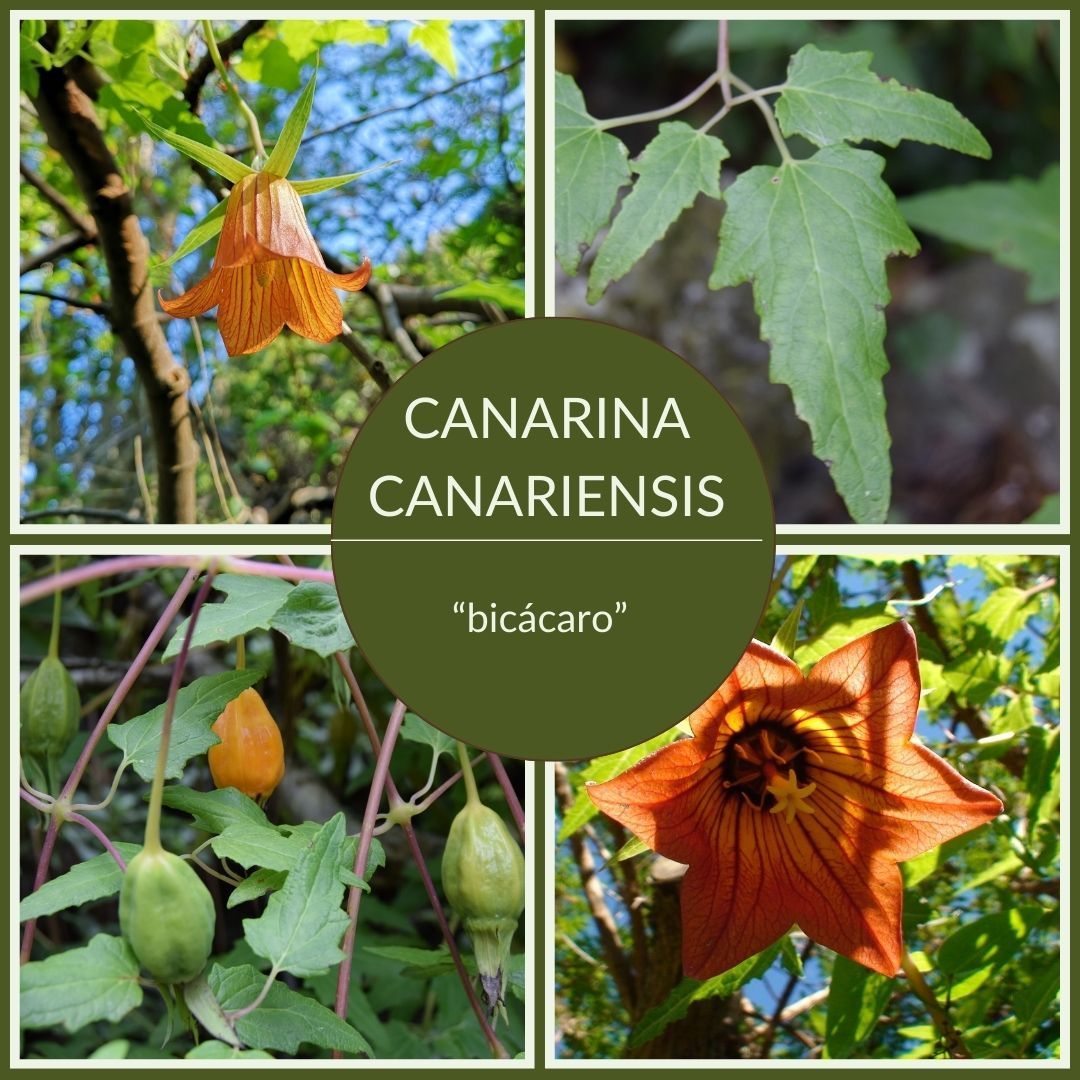
Canarina canariensis is a plant endemic to the Canary Islands that has captivated botanists and nature lovers alike. It is a perennial climbing plant that can reach up to 3 metres in length. Its main attraction lies in its flowers, which are large, bell-shaped and of a striking orange-reddish colour that contrasts beautifully with the dark green of its leaves, creating a visual spectacle that leaves no one indifferent. These flowers, which can measure up to 6 centimetres long, hang delicately from the stems, creating a visual spectacle that does not go unnoticed. The leaves of the Canarina canariensis also contribute to its aesthetic appeal. They are triangular to oval in shape, deep green, and have a serrated edge that adds texture and depth to the plant.
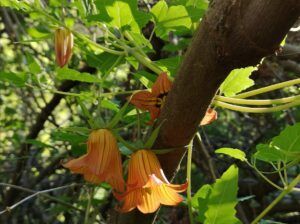
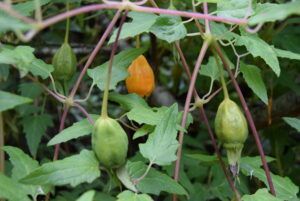
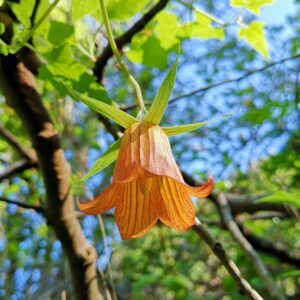
Pictures of Canarina Canariensis (bicácaro) taken at Finca Casa de la Virgen
Flowering period of Canarina Canariensis
One of the most outstanding characteristics is its flowering period. Unlike many plants that flower in spring or summer, the Canarina Canariensis flowers in winter, from October to April, depending on weather conditions. This characteristic makes it a precious plant for adding color and life to gardens at a time of year when many other plants are dormant.
Characteristics and Habitat
It prefers to grow in shady, damp areas, reflecting its adaptation to the laurel forests of the Canary Islands, its natural habitat. These plants are typically found at altitudes between 600 and 1,500 meters, where climatic conditions are cool and humid, creating the perfect environment for their development.
Another interesting feature of the Canarina canariensis is its tuberous root system. These roots store nutrients and water, allowing the plant to survive in difficult conditions and resprout year after year, even if surface conditions are not ideal.
- Scientific name: Canarina canariensis
- Family: Campanulaceae
- Habitat: Endemic to the Canary Islands, found mainly in wooded areas and damp ravines.
- Height: Up to 2 metres.
- Leaves: Green, opposite, ovate leaves.
- Flowering: October to April.
- Fruit: Edible, orange-colored berries.
Conservation and ecological importance
Not only is it a beautiful plant, but it is also of significant ecological importance. As an endemic species, it is a crucial component of the ecosystems of the Canary Islands. Its conservation is vital to maintaining the biodiversity and ecological health of the region.
Conclusion
The Canarina Canariensis is an extraordinary plant that combines beauty, uniqueness and inestimable ecological value. Its dazzling winter flowering and its adaptation to the specific conditions of the Canary Islands make it a jewel of the Canary flora. If you have the opportunity to see a Canarina Canariensis in flower, don’t miss it: you will be contemplating a botanical marvel.